
Insights for California Employers
Practical guidance on PAGA, wage and hour compliance, and workplace law for California employers
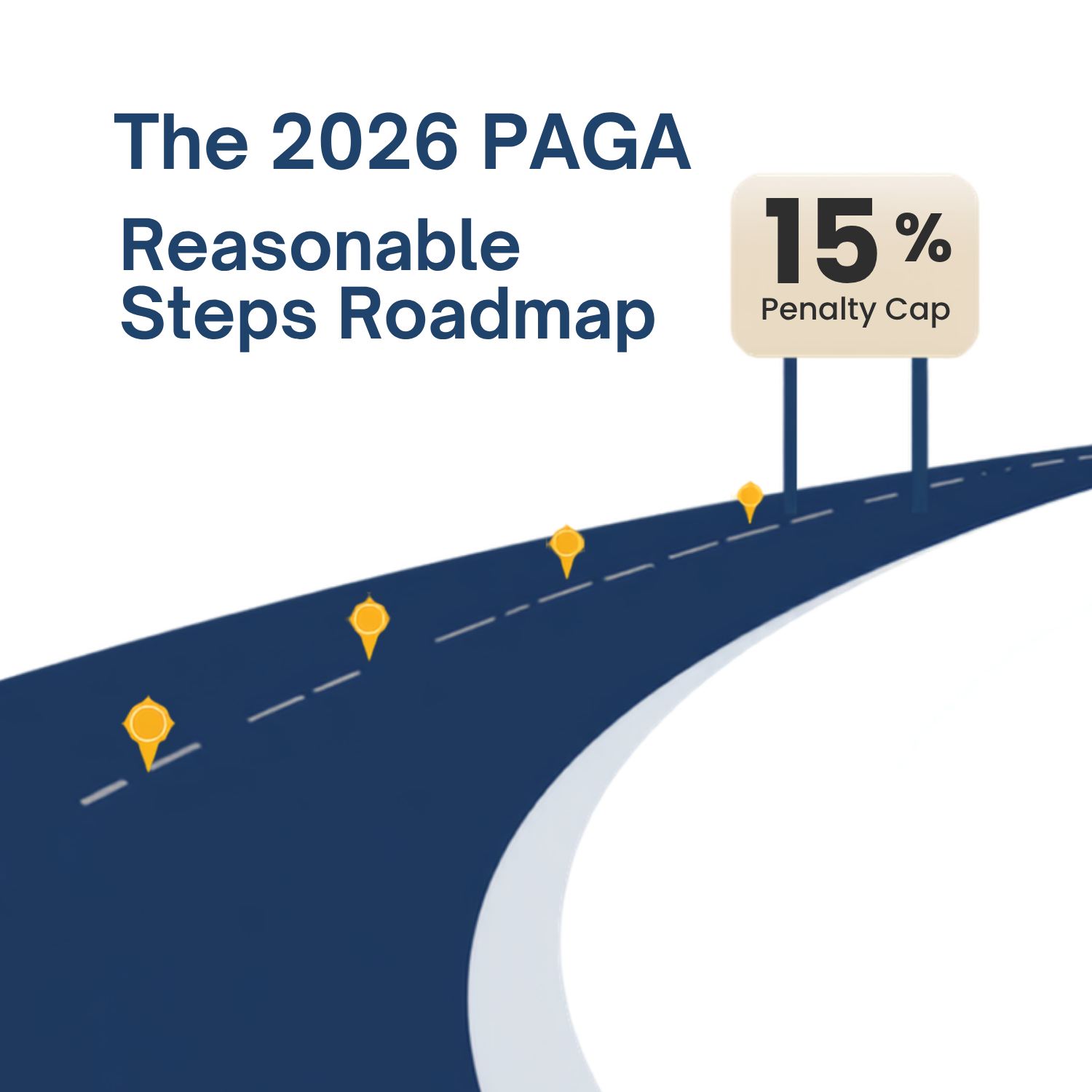
A 2026 Roadmap for California Employers: Establishing Reasonable Steps to Limit PAGA Exposure
PAGA penalties can be capped at 15% — but only for employers who take "all reasonable steps" and document them. A practical 2026 roadmap for California employers.
Tip Pooling and Service Charges in California Restaurants: A Practical Compliance Guide
California's tip rules look deceptively simple: a gratuity belongs to the employee. But the moment an operator builds a workable tip pool, the questions pile up. Who counts as a "manager"? Can shift supervisors share under Chau v. Starbucks — and how narrow is that exception really? When does calling a mandatory fee a "service charge" turn it into wages under O'Grady? And what extra constraints apply in Santa Monica, West Hollywood, Berkeley, and Oakland, where service-charge violations can trigger strict liability?
This article walks through the compliant-pool elements, the Chau facts employers must document, the O'Grady terminology trap, the four local ordinances that overlay state law, and practical sample disclaimer language. It closes with an action checklist for operators auditing their programs in 2026.
Hiring Right from the Start
California employers face more than 20 mandatory new-hire documents, new 2026 notice requirements, pay transparency obligations, and heightened I-9 enforcement. This guide walks through key steps and considerations for on-boarding employees in California.
Strategic Insights from California’s QSR Industry Leaders For 2026 - A Guide For Employers
Navigating 2026: Strategic Insights from California’s QSR Industry Leaders
A Guide for Employers
California’s quick-service restaurant (QSR) operators are navigating unprecedented challenges as they enter 2026. The combination of the state’s $20 minimum wage for fast food workers, evolving technology adoption, shifting consumer expectations, and complex regulatory requirements demands strategic adaptation and innovation.
This white paper synthesizes insights from three distinguished QSR operators—collectively managing nearly 100 locations across California—who shared their strategies, challenges, and innovations at the 2025 California Employer Summit hosted by Zaller Law Group. Their experiences provide a roadmap for hospitality employers seeking to thrive in California’s demanding business environment.
Key Takeaways:
Culture and employee engagement remain the competitive differentiator, not just wage rates
AI and technology should support workers, not replace the human element of hospitality
Strategic deployment of technology delivers ROI when focused on back-of-house operations
Retention and leadership development are more critical than ever in a stabilizing labor market
Compliance is non-negotiable, but it can be integrated into positive culture-building
Navigating California’s New PAGA Landscape: A Practical Playbook for Restaurant & Hospitality Employers
Navigating California’s New PAGA Landscape
A Practical Playbook for Restaurant & Hospitality Employers
PAGA has long been one of the most significant litigation risks facing California restaurant and hospitality employers—turning minor wage-and-hour missteps into high-stakes, bet-the-company claims.
In 2024, California enacted the most meaningful reform to PAGA in more than two decades. While the law still poses serious risk, employers who take proactive, documented compliance steps now have powerful new tools to reduce exposure—including the ability to cap penalties at a fraction of what plaintiffs once sought.
This practical guide explains what changed, why PAGA filings are still increasing, and how restaurant and hospitality employers can move from uncertainty to control. Drawing on real-world defense experience, Zaller Law Group outlines a clear, actionable framework for building a defensible compliance program—covering audits, policies, supervisor training, corrective action, and the role of technology and AI in modern wage-and-hour compliance.
If you operate in California, this playbook shows how to turn PAGA from an existential threat into a manageable, quantified risk.